Orange & Roman theatre
Private Driver to Orange and Its Roman Theatre
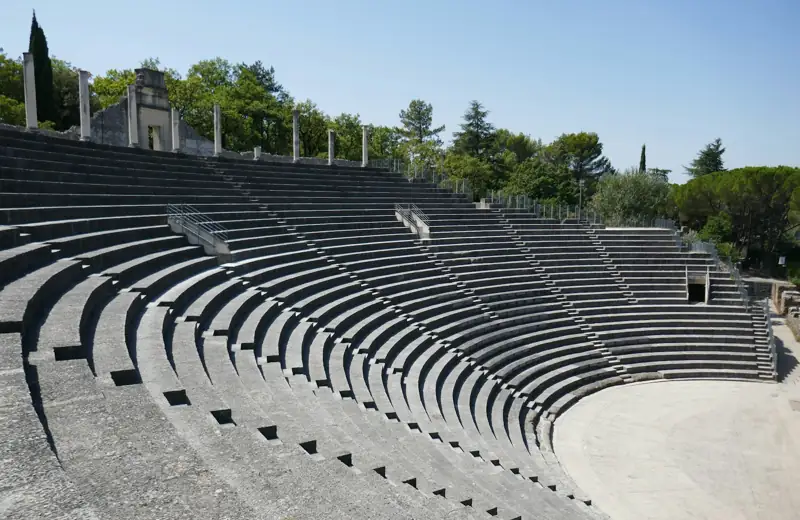
The Roman theatre of Orange is one of the best-preserved Roman theatres in the world. Its stage wall, 37 metres high and 103 metres long, still stands; Louis XIV is said to have called it "the finest wall in my kingdom". Together with the Triumphal Arch, it is a UNESCO World Heritage Site.
What to see
- The Roman theatre: the statue of Augustus, the tiered seating, the view from Saint-Eutrope hill.
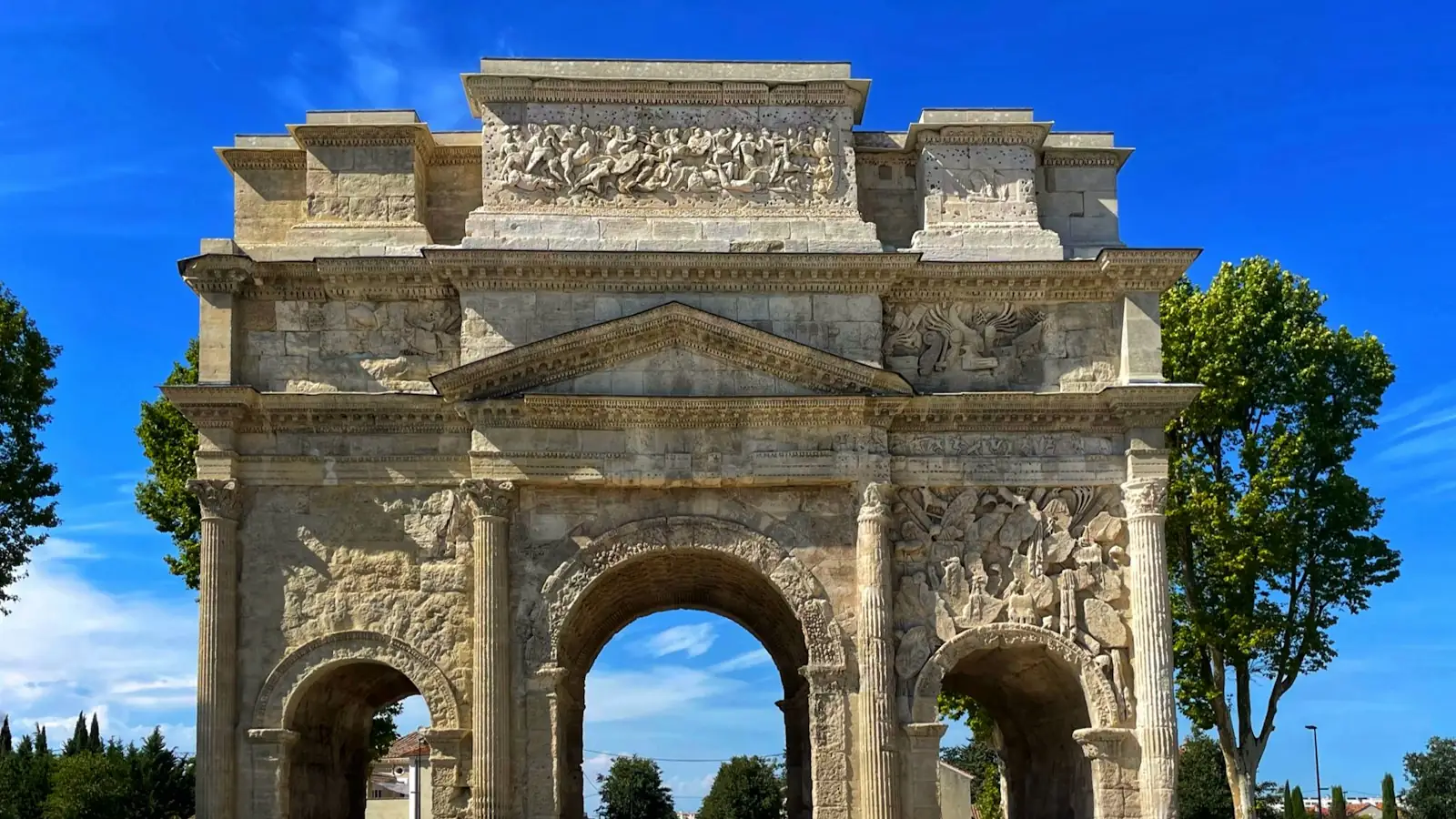
- The Triumphal Arch, decorated with battle scenes.
- Saint-Eutrope hill, a park overlooking the theatre.
- The Art and History Museum opposite the theatre.
The Chorégies d'Orange
Every summer, the theatre hosts the Chorégies, one of France's oldest opera festivals. Shows finish late at night: your driver waits at the exit and takes you back to Avignon, the Luberon or your hotel.
Our options
- Avignon ↔ Orange (about 30 min): from 93 €
- Chorégies evening return trip with waiting time: on request
- Day tour Orange + Châteauneuf-du-Pape + Vaison-la-Romaine: on request
How long does it take to visit the Roman theatre of Orange?
Allow about 1 to 1.5 hours for the Roman theatre, plus another hour if you add the Art and History Museum just opposite. With the Triumphal Arch and a walk up Saint-Eutrope hill, half a day is enough to see the highlights of Orange without rushing.
Planning your visit
The best order
Ask your driver to drop you at the Triumphal Arch first, on the north side of town, and then take you on to the theatre. That saves a fifteen-minute walk in the sun and leaves you in the centre, close to cafés and restaurants, at the end.
Don't miss
- The stage wall from the top rows: only from up there do you appreciate its true scale.
- The museum: among its treasures are fragments of the Roman land register of Orange, marble slabs engraved with the plots of the colony.
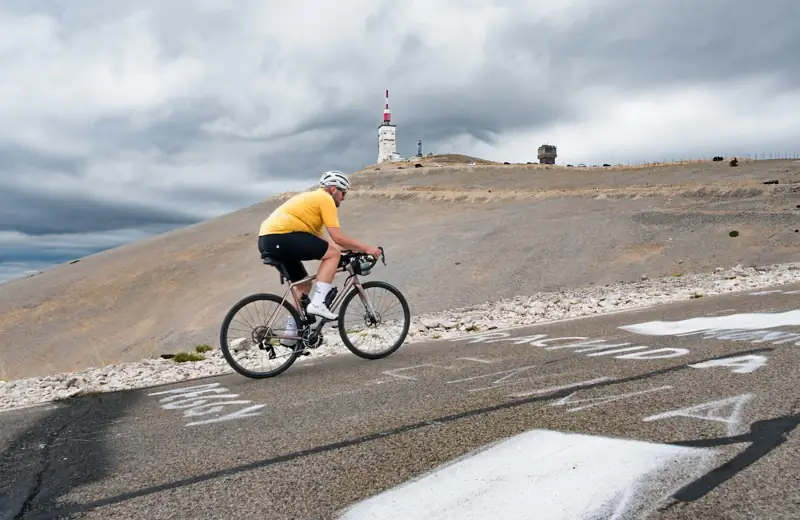
- Saint-Eutrope hill: a view straight down into the theatre and, on a clear day, across to Mont Ventoux.
Thursday morning
Thursday is market day in Orange, in the streets of the old centre. If your dates allow, it is an easy way to combine history with local produce.
Going to the Chorégies opera festival: practical tips
Chorégies performances start in the evening and often finish after midnight. A few tips:
- the seats are stone tiers, so bring a cushion;
- pack a jacket, as it cools down and the wind can pick up;
- arrive early, as entry takes time.
When the show ends, thousands of people leave at once. Your driver waits at a meeting point agreed in advance, so you skip the scramble for a taxi. The ride back to Avignon takes about 30 minutes, and we can just as easily take you to the Luberon or a village hotel.
What to see near Orange
Orange combines well with other stops in northern Provence:
- Châteauneuf-du-Pape, about twenty minutes away, for an afternoon wine tasting;
- Sérignan-du-Comtat, where you can visit the Harmas, the house and garden of the naturalist Jean-Henri Fabre;
- The Dentelles de Montmirail, with the villages of Gigondas and Séguret;
- Vaison-la-Romaine, to complete a Roman Provence day trip.
Orange station is served by regional trains and some TGVs, and your driver can meet you there too: see our Vaucluse station transfers.
Who is it for?
- Families: a manageable visit with little walking between sights, and child seats on request.
- History lovers: Orange in the morning, Vaison-la-Romaine in the afternoon.
- Opera fans and groups: the 7-seat van lets you travel to the Chorégies together and get home together.
- River cruise passengers docked in Avignon, for a few hours ashore.
- Business travellers with a free afternoon between meetings, who want to see a UNESCO site without worrying about trains or parking.
Whether you need a day tour or an evening return trip, we confirm a fixed price per vehicle before you book.
Frequently asked questions
How long from Avignon to Orange?
About 30 minutes.
Can the driver wait until the end of a Chorégies show?
Yes, your driver waits at the exit.
Can we combine Orange and Vaison-la-Romaine?
Yes, that's our "Roman Provence" day tour.